( Breadfast · Consumer loyalty & internal tooling · Egypt )
Sip
and Stamp
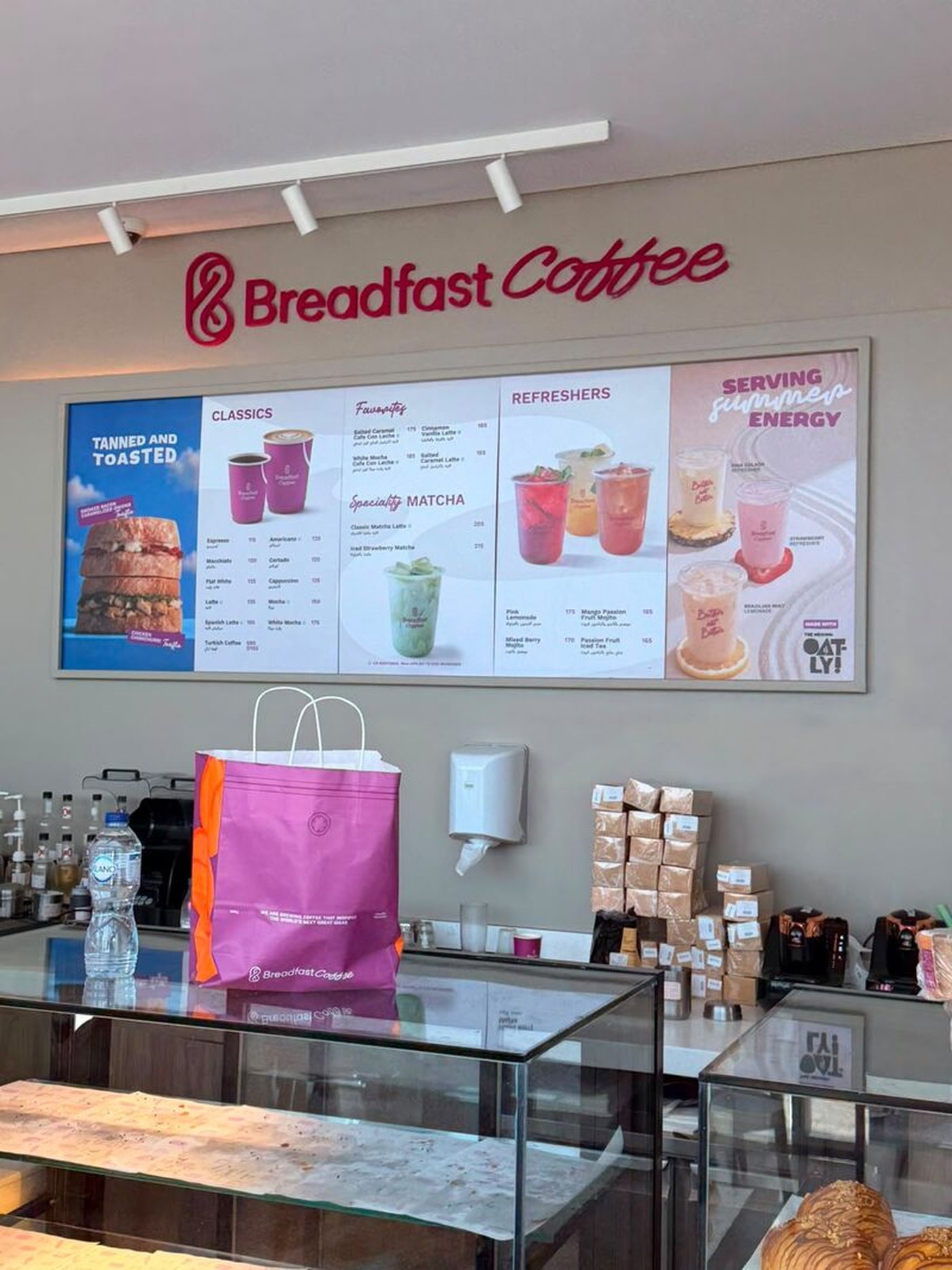
Breadfast delivers groceries to half a million people a month and runs a specialty coffee chain of around 35 shops. The coffee is already in the app, but the two sides of the business ran past each other. This project was about integrating the shops into the ecommerce experience: a digital punch card that sends each audience into the other, and the admin panel that lets the business run it without engineering.
( 01 · The problem )
Two crowds, one brand, never meeting
This was not a discovery problem. Coffee had its own tab in the app and the shops had Breadfast signage on the door. People had no reason to move between them.
App customers treated Breadfast as a delivery service, so coffee read as a category rather than a place to go. Shop customers had a relationship with a barista rather than with the app, and their loyalty was real but invisible, living in habit instead of in anything the business could see.
The brief was not build a loyalty programme. It was make each half of the business a reason to use the other half.
( 01 )
The app user had no reason to leave the house
Nothing in the app suggested there was a physical Breadfast nearby, and nothing rewarded going there.
( 02 )
The shop customer had no reason to open the app
They were already getting their coffee. The app had to offer something the counter could not.
( 03 )
Loyalty existed but nothing could see it
Regulars were regulars and the business could not tell. A habit nobody acknowledges moves the first time a competitor opens closer.
( 02 · The decision )
Why a punch card and not points
Breadfast already had points. Extending them to coffee would have been the cheapest thing to build and the worst thing to ship. Points are abstract, they accrue slowly, and nobody walks into a cafe thinking about a balance.
A punch card is the format the coffee world already speaks. The goal is fixed, it is close, and progress reads in one glance. We were asking shop customers to open an app, so what waited inside had to be something they already understood.
( 03 · The solution )
The punch card
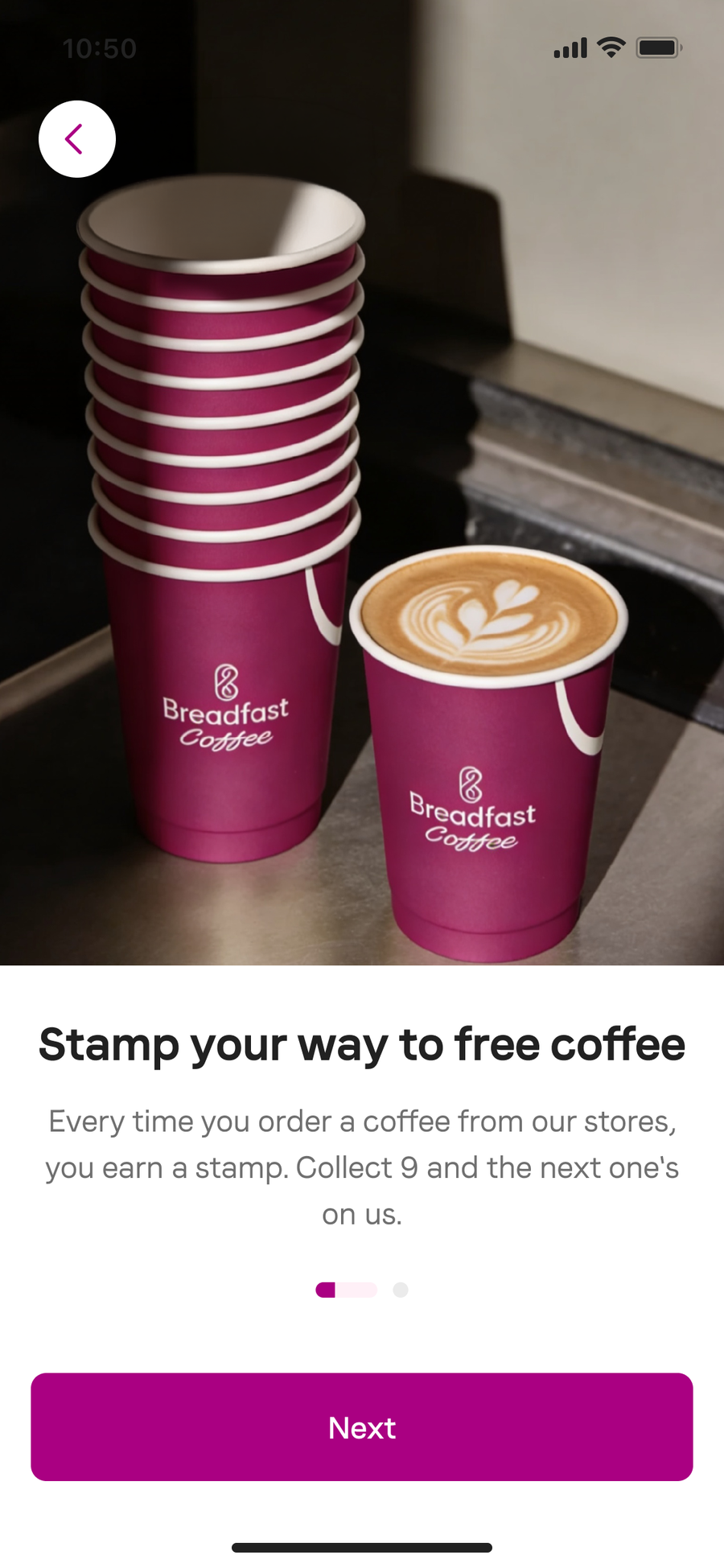
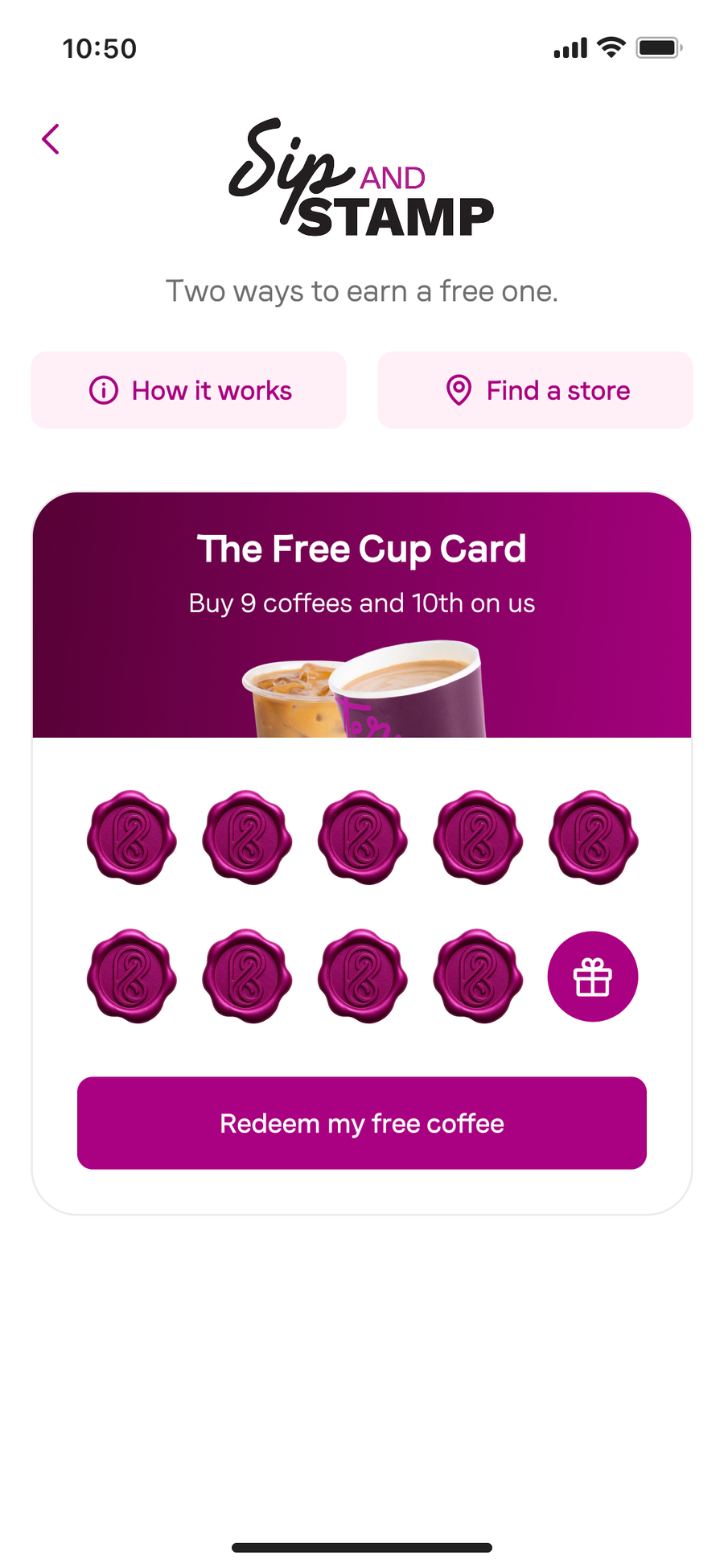
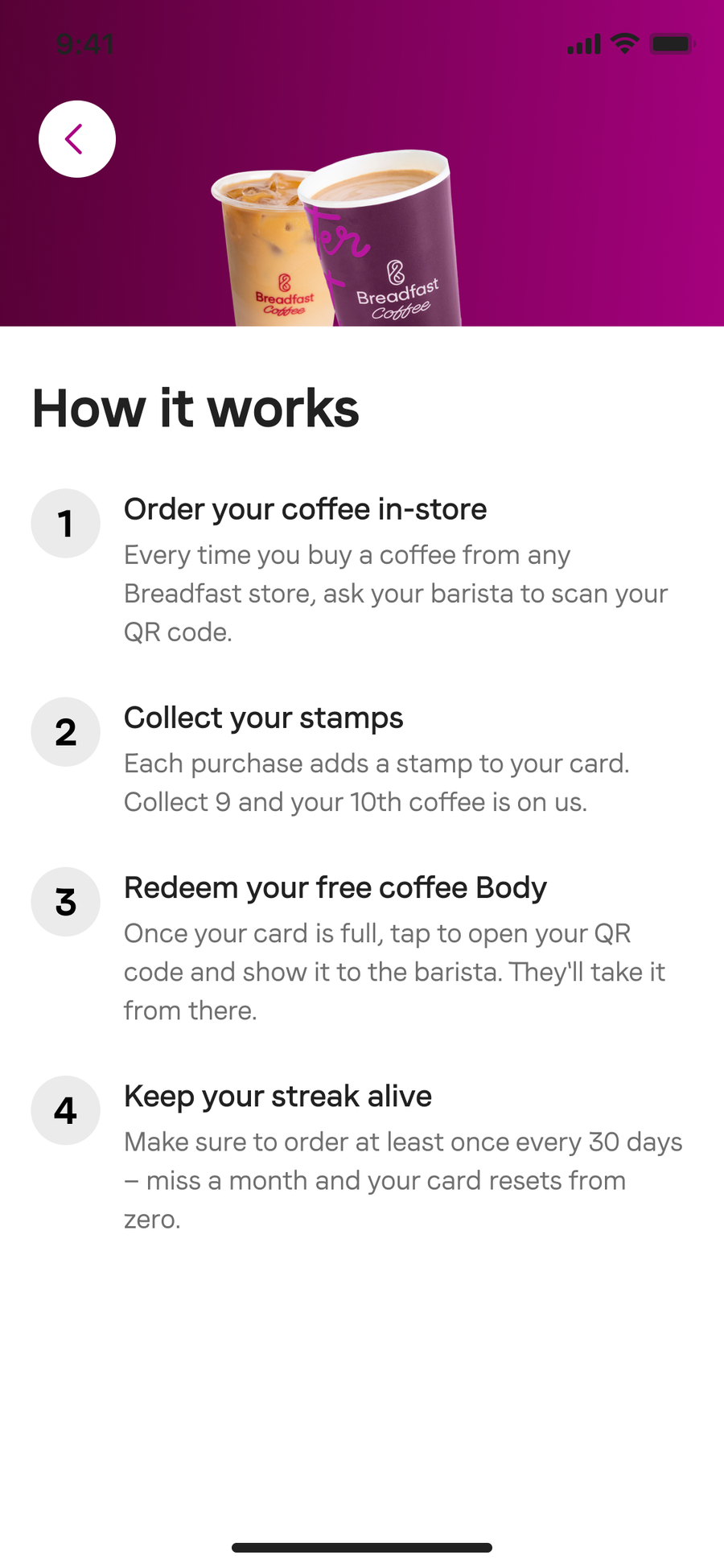
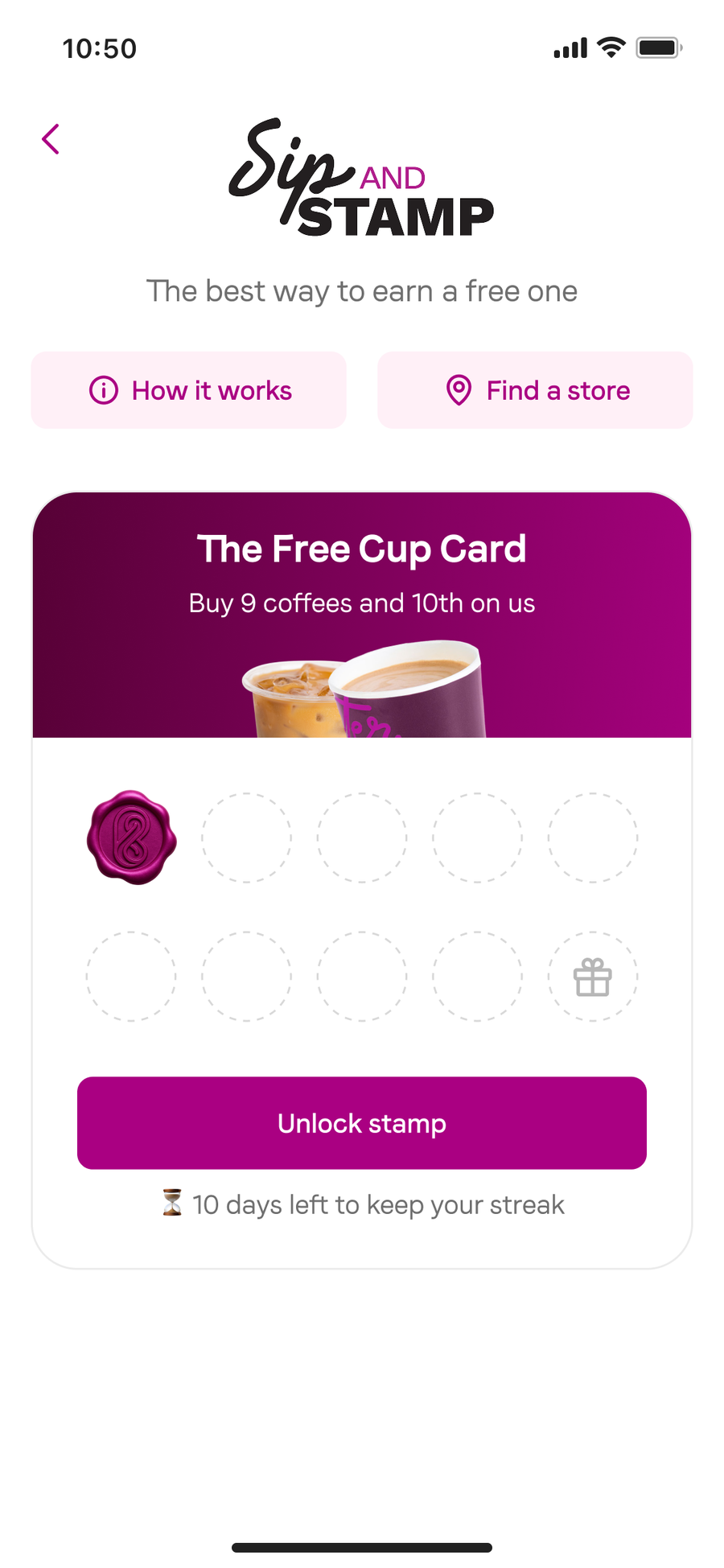
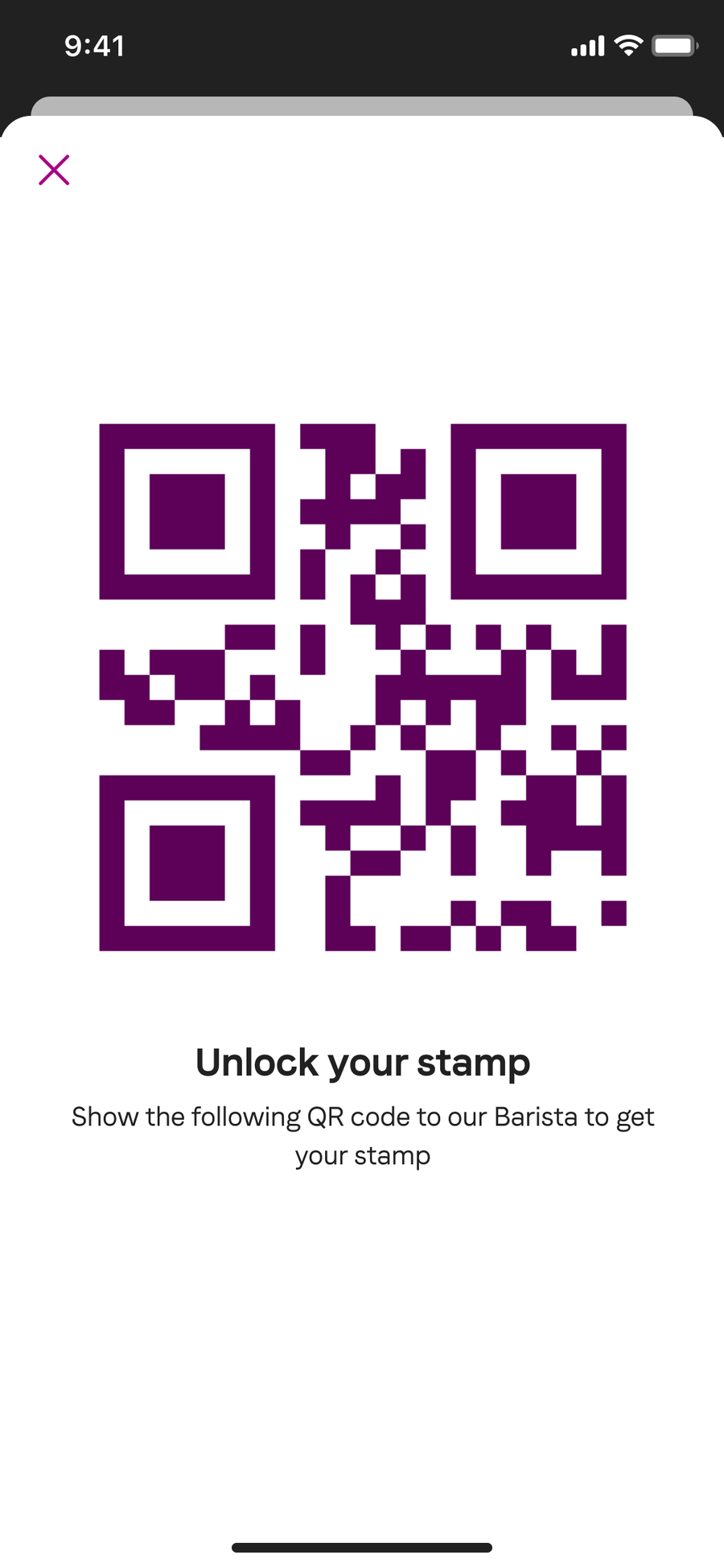
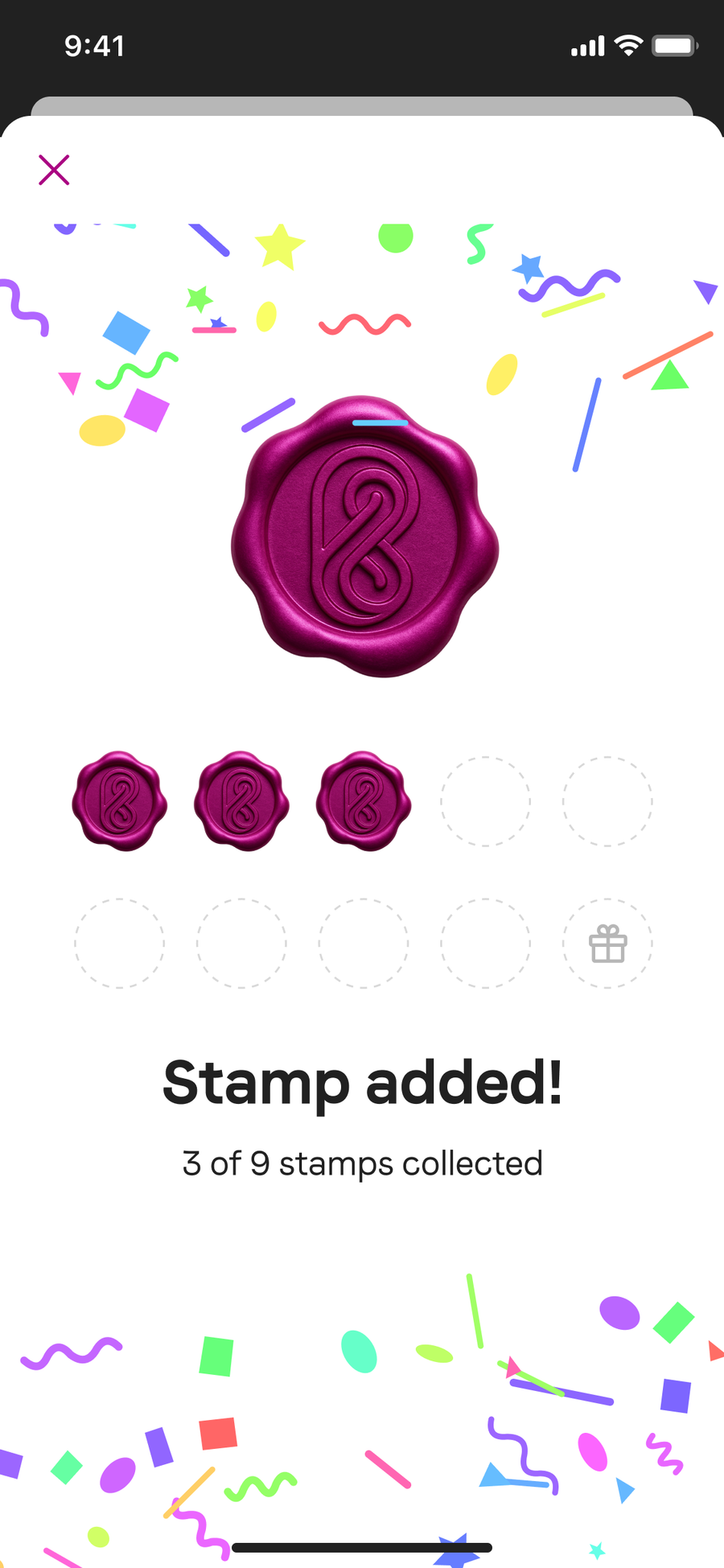
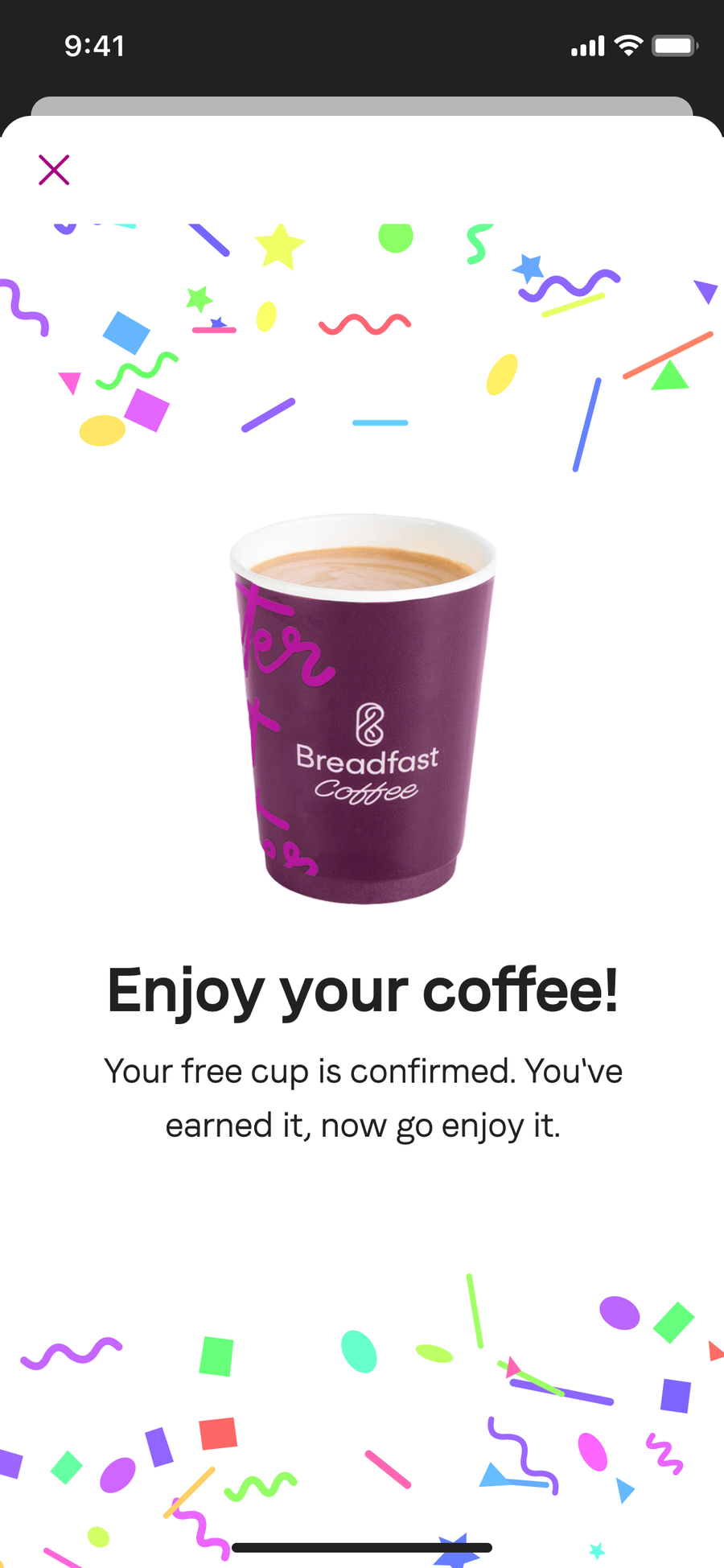
Buy nine coffees, the tenth is on us. You collect the card in the app, unlock each stamp at the counter with a QR code, and redeem the free cup the same way.
( 04 · Language )
Written the way a barista would say it
Where that shows up:
( 01 )
“Buy 9 coffees and 10th on us”
The offer as arithmetic, on the card where the eye already is. No eligible purchases, no asterisk.
( 02 )
“The best way to earn a free one”
Short and casual, and it never says the word programme.
( 03 )
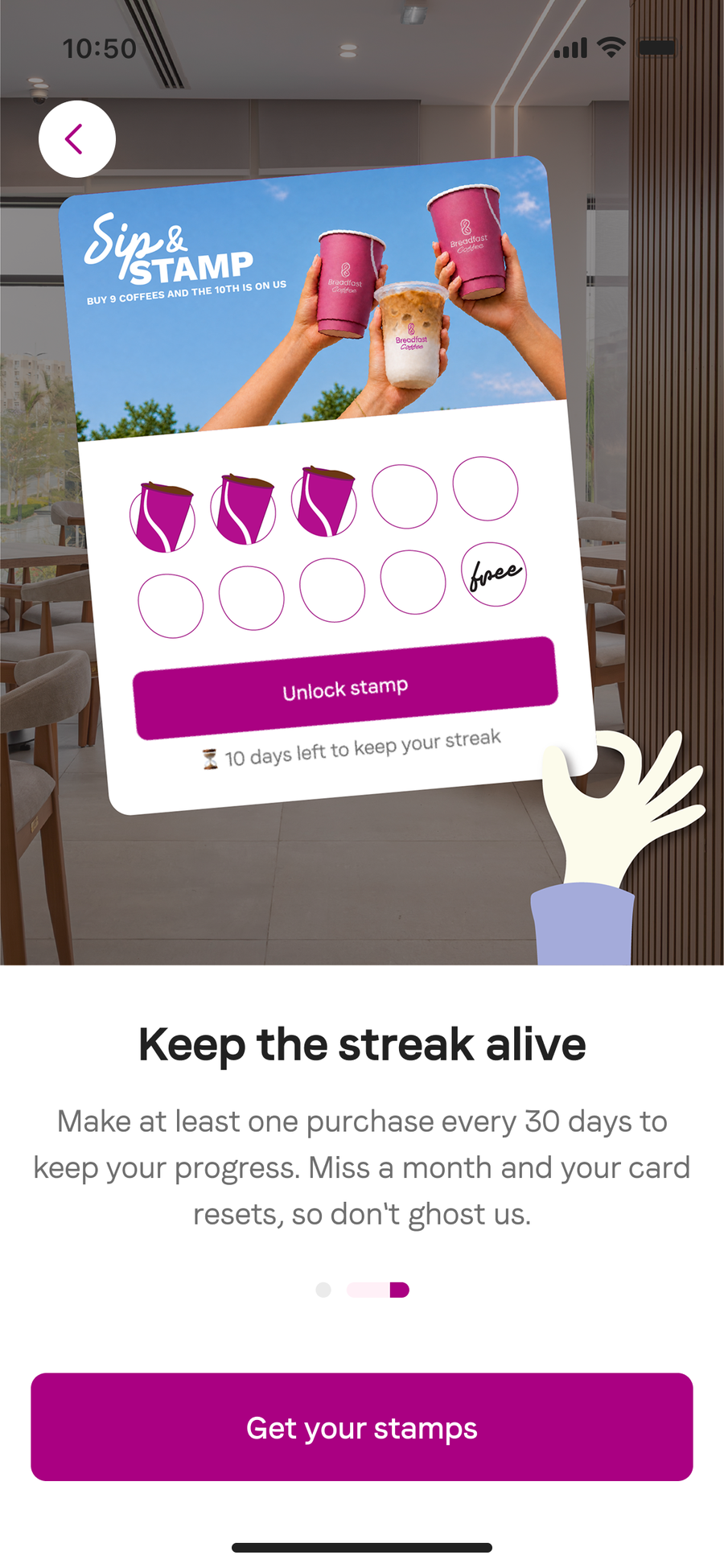
“Miss a month and your card resets, so don’t ghost us”
The rule that costs people something, said the way a friend would say it.
( 04 )
“Show the following QR code to our Barista”
Names the human rather than the system.
( 05 )
“You’ve earned it, now go enjoy it”
The last line in the product. It closes the loop and stops talking.
( 05 · The admin side )
One card was never the product
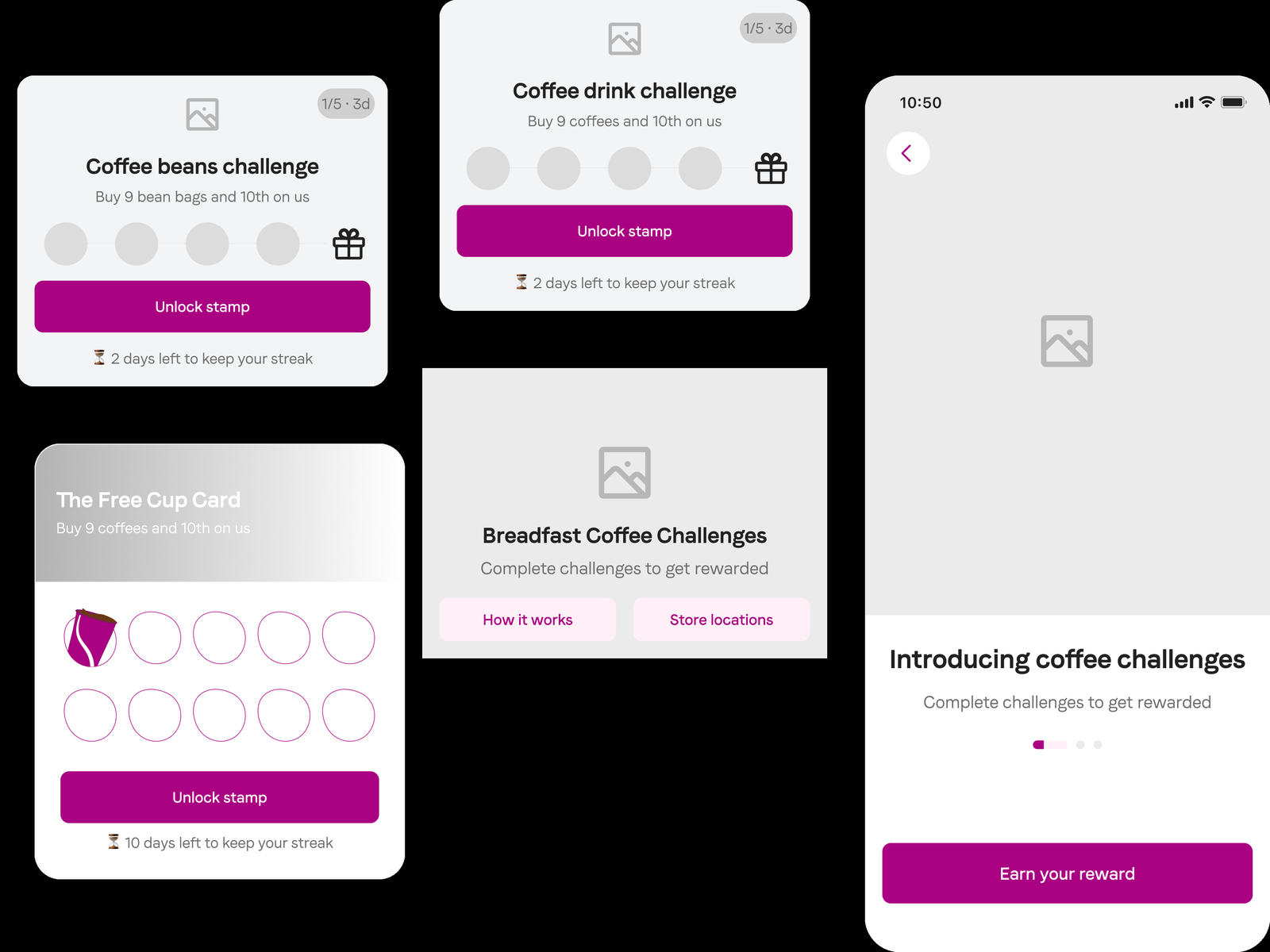
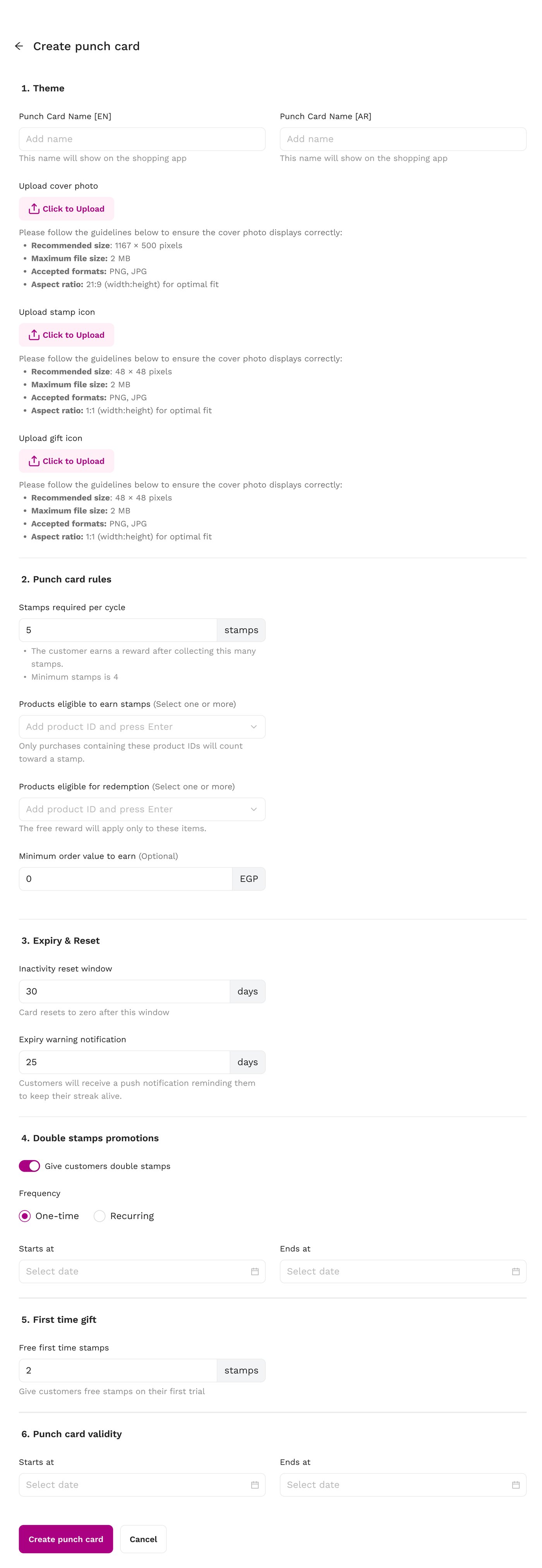
Everything above is one card. The business needed to run several at once, a beans card next to a seasonal card, and to change them mid campaign without waiting on a release.
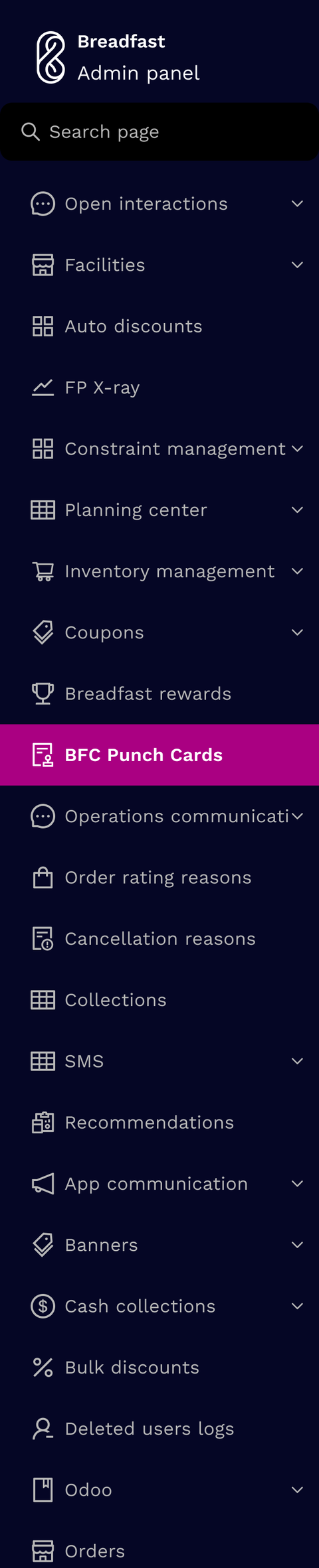
So the second half of the project is an admin panel in the Breadfast back office, where every number the customer sees is set.
( Scroll inside the panel )
( In short )
A punch card gave two audiences a reason to meet, and an admin panel gave the business a way to keep running it. The card is the part customers see. The panel is the part that decides how many cards there will ever be.